





























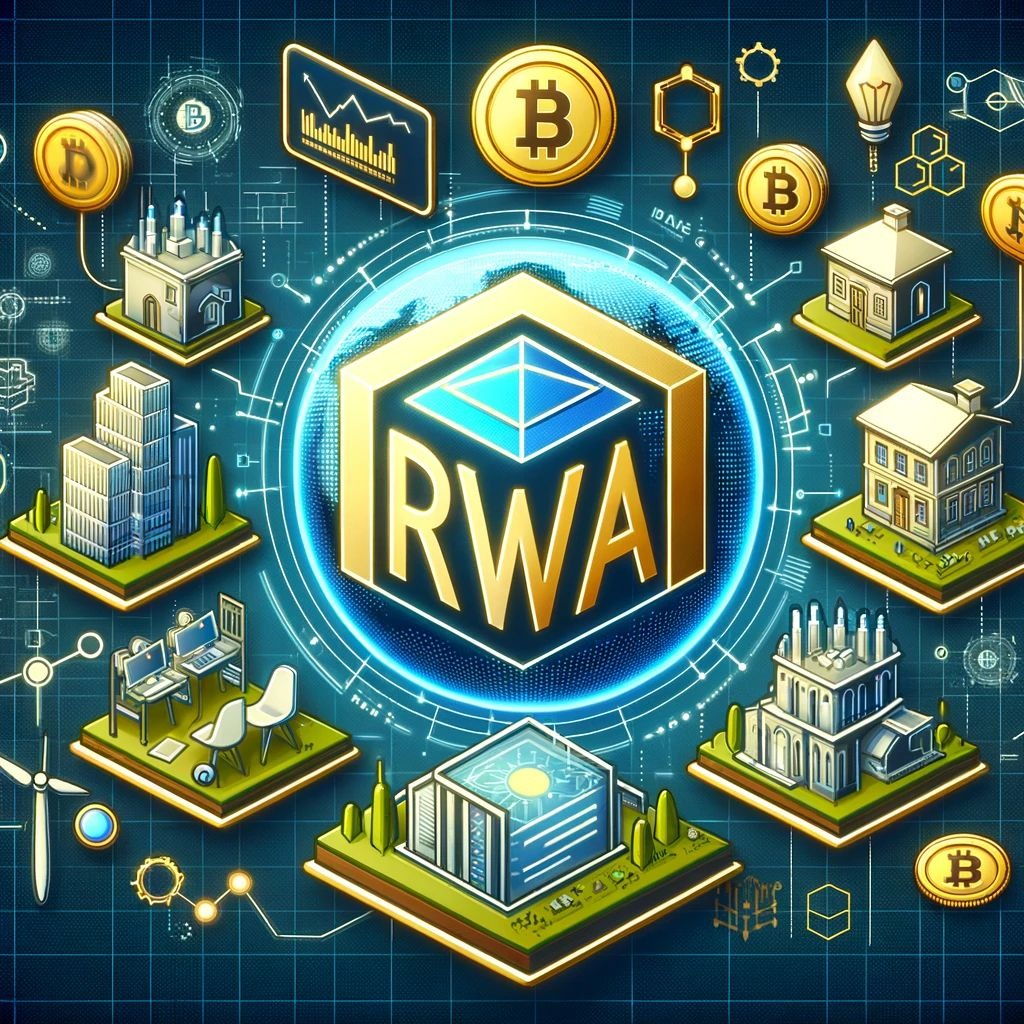
The idea of tokenization has become very popular in the age of digital transformation. Real-World Asset (RWA) tokenization stands out among the several types of tokenization as a ground-breaking strategy that connects blockchain technology with conventional assets. This essay explores the complexities of RWA tokenization, including its ramifications, advantages, difficulties, and opportunities. Our goal is to offer a resource that fully meets user intent, deepens contextual comprehension, and improves search engine visibility by utilizing advanced Semantic SEO principles.
Understanding RWA Tokenization
The practice of using blockchain technology to create a digital representation of physical goods is known as “real-world asset tokenization.” Real estate, commodities, artwork, and even financial instruments are examples of these assets. These tangible assets become more accessible, divisible, and tradeable in a decentralized way when they are transformed into tokens. Increased liquidity and asset management efficiency are made possible by each token’s representation of ownership or a share in the underlying asset.
Blockchain, a decentralized digital ledger that guarantees security and transparency, is the technological foundation of RWA tokenization. Blockchain technology makes it possible to track and verify asset ownership in real time, in contrast to traditional asset management systems, which frequently have inefficiencies and lack transparency. This is especially helpful in industries like art and luxury goods where provenance and trust are crucial.

The Benefits of RWA Tokenization
RWA tokenization has many benefits. First of all, it makes investing more accessible to all. Traditionally, only wealthy people or institutional investors could afford to invest in high-value assets like real estate or fine art because doing so required a significant amount of resources. Tokenization lowers the entrance barrier and promotes financial inclusion by enabling fractional ownership, which allows different investors to hold a portion of the asset.
Second, the tokenization of RWA improves liquidity. For instance, real estate is notoriously illiquid and frequently takes a long time to sell. Secondary markets allow for the trading of tokenized assets, facilitating faster transactions and increasing market fluidity. For investors seeking rapid exits or diversification without the drawn-out procedure usually associated with traditional asset sales, this feature is essential.The decrease in expenses is another advantage. Transaction fees and administrative expenses are greatly reduced by eliminating middlemen like banks and brokers. This encourages the effective use of capital and increases the profitability of investments. Additionally, the implementation of smart contracts—self-executing agreements whose terms are explicitly encoded into code—automates procedures, lowering overhead and minimizing human error.
Challenges Facing RWA Tokenization
RWA tokenization has drawbacks despite its many advantages. Regulatory compliance is still a major obstacle. Tokenized asset governance is complicated by the fact that different jurisdictions have different laws pertaining to securities and asset ownership. For RWA tokenization to endure and be accepted in mainstream finance, navigating this complicated legal environment is essential.
Technological danger is another issue. Although blockchain technology is praised for its security, there are still flaws. For instance, smart contracts may have faults or be vulnerable to hacking, which could result in the loss of money or assets. Protecting investor interests requires tokenization platforms to follow strict security guidelines.Additionally, the adoption of tokenization depends heavily on market education. The ramifications of blockchain technology for asset management are yet unknown to many stakeholders and investors. To clarify the potential of RWA tokenization and promote broad acceptance, extensive educational programs are required.
The Future of RWA Tokenization
As more industries start to investigate the benefits of RWA tokenization, the future appears bright. Tokenization is gradually taking hold in sectors like commodities, real estate, and the arts. With the emergence of tokenization systems that enable smooth transactions and fractional ownership, the real estate industry in particular is set to undergo significant change.
Additionally, the efficiency and scalability of tokenized asset exchanges are expected to be improved by technological developments in blockchain infrastructure, such as the creation of layer-two protocols and interoperability solutions. In the end, this innovation will increase market confidence by facilitating broader adoption and developing new ecosystems for trading tokenized assets.The future of RWA tokenization also depends heavily on the integration of enterprise-level platforms. Businesses may improve risk assessment, market analysis, and investment strategies by utilizing blockchain technology in conjunction with AI and machine learning. A better grasp of asset value and more informed investment decisions will result from this synergy.
Conclusion
A paradigm shift in our understanding of ownership, investment, and asset management is represented by real-world asset tokenization. RWA tokenization democratizes access, improves liquidity, and lowers transaction costs by utilizing blockchain technology, but it also poses a special set of difficulties. Understanding the possibility and ramifications of RWA tokenization is becoming more and more important for investors, business executives, and regulators as the financial world continues to change.
In conclusion, the ongoing research and development of RWA tokenization could change the investment environment as we approach a new financial era by increasing the accessibility, efficiency, and security of assets.
FAQs
What is RWA tokenization?
RWA tokenization involves converting tangible assets into digital tokens on a blockchain, allowing for fractional ownership and improved liquidity.
What are the benefits of RWA tokenization?
Key benefits include democratized access to investments, enhanced liquidity, reduced costs, and improved asset management efficiency.
What challenges does RWA tokenization face?
Challenges include regulatory compliance, technological risks associated with blockchain, and the need for market education.
How does RWA tokenization impact the real estate market?
It allows for fractional ownership, making real estate investments accessible to a broader audience and improving liquidity in property transactions.
What is the future of RWA tokenization?
The future looks promising with increasing adoption across various sectors, driven by technological advancements and an evolving regulatory environment.